
- Popular
Investment Banking Analyst & Associate Program (IBAAP)
- 4.5/5 (1500+ Student's Ratings)
Next Cohort
This Week
Duration
6 Months . Online
20+
Freelance Projects
Eligibility
Freshers, Graduates, Experienced
What Our Program Offers?
Our Post Graduation Program in Investment Banking Analyst & Associate Program ( IBAAP) equips you with industry-ready skills through advanced tools and expert support.
- 1:1 Doubt Clearing Session
- Live Hackathons
- Lifetime Career Support
- Webinars And Workshops
- Extensive Course Materials
- 300+ Hours of Self Paced Learning
- 400+ Hours of Live classes
- Industry Expert Mentors
- 360° Placement Assistance
- 24/7 Student Support
- Personalized Learning Paths
- Regular Assessments
- Progress Tracking
- Networking Opportunities
- Flexible Learning Schedules
- Strong Alumni Network
- Interview Preparation
- Certification Programs
- Interactive Learning Platform
- Real World Projects
What Sets inGrade Apart?

Industry-Leading Curriculum
Stay ahead with modern content built for evolving tech industry.

Expert Instructors
Learn from top professionals who bring real-world experience to every lesson.

Hands-on learning
Master skills through practical projects building confidence and real competence.

Placement-Oriented Sessions
Jumpstart your career with results-driven sessions leading to top jobs.

Flexible Learning Options
Learn on your schedule with flexible, personalized learning paths.

Lifetime Access to Resources
Get unlimited access to learning materials even after course completion.

Community and Networking
Connect with global learners and industry leaders for support.

High-Quality Projects
Build impactful project portfolio to showcase your skills to employers.

Freelance Work Training
Gain the skills and knowledge needed to succeed as freelancers.
Course Curriculum
This program is designed to equip learners with core investment banking knowledge, financial modeling expertise, and data-driven financial analytics skills used by professionals in global financial institutions, consulting firms, private equity funds, and corporate finance teams. The curriculum is structured into two comprehensive learning tracks, combining finance theory, valuation practices, and modern analytical tools used in the industry.
- Part 1 – Investment Banking
Module 1: Fundamentals of Finance
- Introduction to Finance and Financial Management
- Objectives of Financial Management
- Time Value of Money and Financial Applications
Module 2: Fundamentals of Economics
- Inflation and Economic Indicators
- Cash Reserve Ratio (CRR)
- Statutory Liquidity Ratio (SLR)
- Utility and Consumer Behavior
- Production Functions (Short Run & Long Run)
- Demand and Supply Analysis
Module 3: Introduction to Investment Banking
- What is Investment Banking?
- Role of Investment Banks in Capital Formation
- Investment Banking vs Commercial Banking
- Revenue Streams of Investment Banks
- Types of Investment Banks
- Core Investment Banking Functions
Module 4: Cash Equities and Capital Markets
- Share Capital and Equity Instruments
- Preference Shares
- Primary vs Secondary Markets
- Initial Public Offerings (IPO)
- Initial Public Offerings (IPO)
- Depository Receipts
- Corporate Actions
Module 5: Derivatives & Risk Management
- Introduction to Derivatives
- Forward Contracts
- Features of Derivatives
- Options
- Swaps
- Payoff Structures
- Hedging Strategies
Module 6: Fixed Income Securities
- Bond Markets
- Money Markets
- Types of Bonds
- Market Participants
- Credit Rating Agencies
- Risks Associated with Bonds
- Securitization Process
Module 7: Asset Management & Mutual Funds
- Mutual Funds and Investment Vehicles
- Structure of Asset Management Companies
- Regulatory Framework
- Net Asset Value (NAV)
- Expense Ratio
- Risk Measurement
- Performance Evaluation
Module 8: Financial Statement Analysis
- Income Statement
- Balance Sheet
- Cash Flow Statement
- Inter-linkages Between Financial Statements
- Accounting Concepts
- Revenue and Expense Classification
Module 9: Financial Modelling & Valuation Fundamentals
- Fundamentals of Financial Modelling
- Biases in Valuation
- Sources of Uncertainty
- Sources of Uncertainty
- Discounted Cash Flow (DCF)
- Relative Valuation
- Philosophical basis of Valuation
Module 10: Cost of Capital & WACC
- Introduction to Cost of Capital
- Mode of Financing
- Cost of Debt
- Cost of Equity
- Synthetic Credit Ratings
- Weighted Average Cost of Capital (WACC)
- Portfolio Risk Measurement
- Weighted Average Cost of Capital, Calculation of Beta and Standard Deviation (for single security as well as portfolio).
Module 11: Relative Valuation Techniques
- Introduction to Relative Valuation
- Steps in Comparable Analysis
- Equity Value,EBITDA, Gross Profit Margin
- Comparable Company Analysis
- Enterprise Value vs Equity Value
- Credit Profile Assessment
- Precedent Transaction Analysis
Module 12: Startup Valuation
- Startup Financial Models
- Cash Flow Management
- Raising Capital
- Debt Financing
- The sale and Revenue Model, COGS Model, Advertising Model, Cost of sales and Marketing Model,
- Revenue Models
- Cost Structures
- Equity Financing Rounds
- Venture Capital Structures
Module 13: Mergers, Acquisitions & Leveraged Buyouts (LBO)
- M&A Overview
- Deal Structuring
- Purchase Price Allocation
- Pro Forma Financial Statements
- Synergy Analysis
- LBO Economics
- LBO Economics
- LBO Financial Modelling
- PART 2 - Financial Analytics
Module 1: Microsoft Excel for Financial Analysis
- Excel Navigation & Shortcuts
- Data Structuring
- Conditional Formatting
- Financial Functions
- VLOOKUP, HLOOKUP, INDEX, MATCH
- CAGR, IRR, XIRR, NPV
- Scenario Analysis
- Sensitivity Analysis
- Advanced Financial Modelling
Module 2: PowerPoint for Investment Banking Presentations
- Presentation Design Principles
- Slide Layout and Formatting
- Data Visualization
- Financial Charts
- Graphics Integration
- Pitch Deck Creation
Module 3: Power BI for Financial Data Visualization
- Data Import & Transformation
- Data Modeling
- Interactive Dashboards
- Financial KPI Monitoring
- DAX Basics
Module 4: Tableau for Advanced Financial Analytics
- Tableau Interface
- Data Preparation
- Visualization Design
- Dashboard Development
- Interactive Reporting
- Data Storytelling
- Soft Skills Program
Technical skillset and your soft skills combine to make you employable. In order to make our learners employable, dedicatedly placement-oriented sessions are conducted while highlighting the use of Github, Linkedin, and other tools during the job search.
- Resume Building
- Communication Skills
- Interview Preparation
- Time Management
- HR Round Guidance
- E-mail Writing
- Personality Development
- Emotional Intelligence
- Conflict Management
- Salary Negotiation
- Creativity
- Get Certification
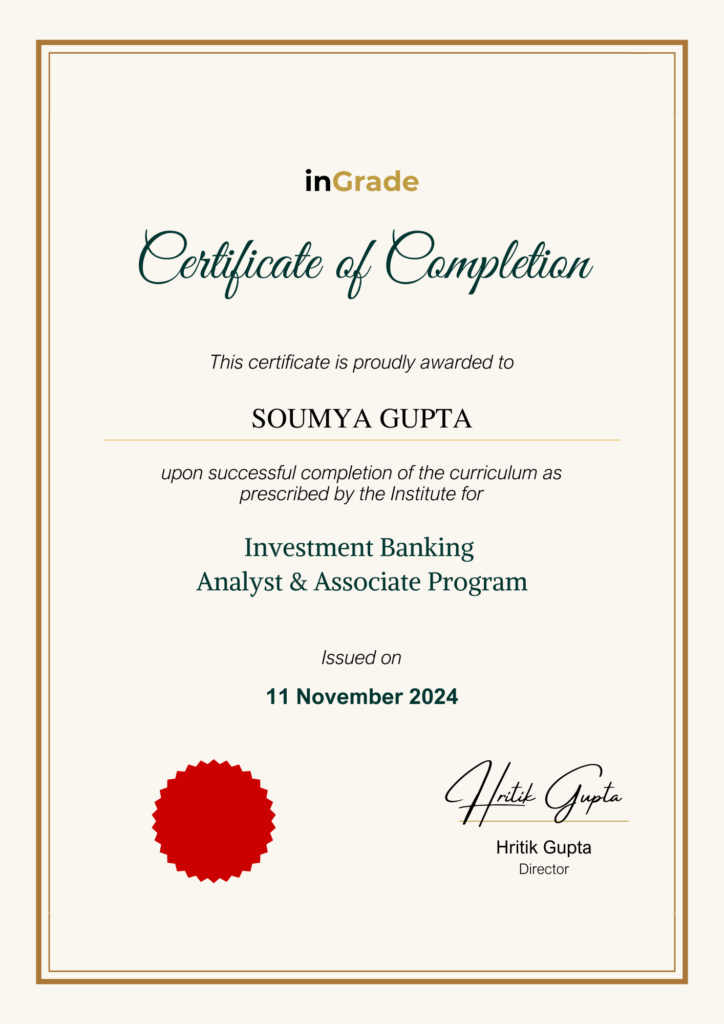
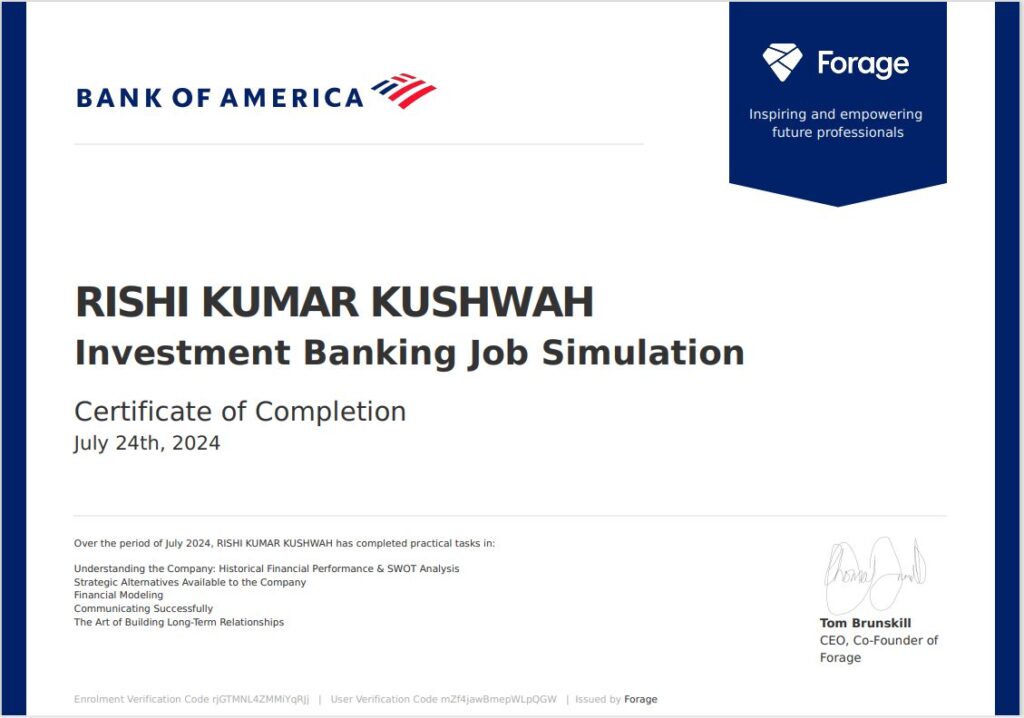
Post Graduation Program in Investment Banking Analyst & Associate Program ( IBAAP)
6 Months . Online-
100% Secure Transactions
-
Multiple Payment Options
-
24/7 Payment Support
-
EMI Option Available
Career Opportunities
Elevate your professional journey with elite roles in the global financial sector.
Tools We Cover
























Projects
Financial Risk Modeling
Financial institutions analyze market volatility, interest rates, and asset performance to evaluate investment risks. This project focuses on building models to measure portfolio risk and predict potential financial losses.
Credit Risk Assessment
Banks evaluate the financial health of borrowers before issuing loans. This project involves analyzing borrower data and building models to predict the probability of loan defaults.
Portfolio Optimization
Investment managers aim to balance risk and return while allocating assets across different investments. This project focuses on creating an optimized portfolio using historical financial data.
Fraud Detection in Financial Transactions
Financial institutions analyze transaction data to detect suspicious activities and prevent financial fraud. This project focuses on identifying patterns that indicate fraudulent transactions.
Corporate Valuation Modeling
Investment bankers estimate the value of companies before investment decisions or acquisitions. This project focuses on building valuation models using financial statements and market data.
Mergers & Acquisitions Analysis
Investment banks evaluate the potential success of mergers and acquisitions by analyzing company financials, industry trends, and deal structures.
Market Sentiment Analysis
Financial analysts analyze news, earnings reports, and social media discussions to understand investor sentiment and its effect on stock prices.
Stock Price Forecasting
Historical stock prices and economic indicators are used to build predictive models that estimate future price movements.
Case Studies
Build Your Future Inside the World’s Most Powerful Investment Firms

































Meet our inGraders






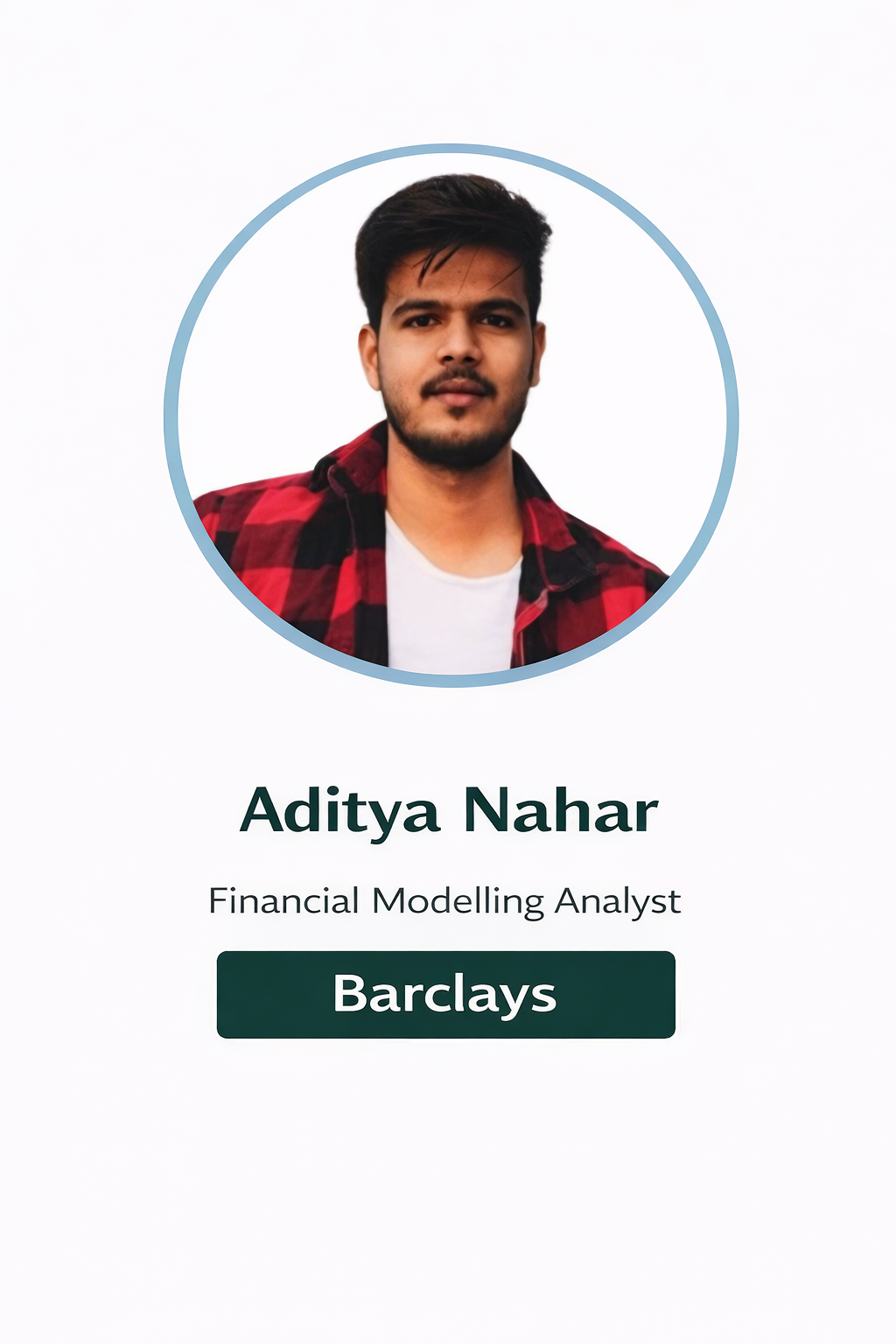
Alumni Highlights
Roles Offered in Investment Banking
Application Process for inGrade
Career Consultation
Assess eligibility with our expert team.
Personalized Guidance
Receive an acceptance letter if eligible.
Easy Registration
Pay booking amount to confirm seat.
Start Upskilling
Access curriculum and begin journey.
Ongoing Support
Mentorship and career assistance.
Learning is better with Ingrade
- Launch your career in Investment banking today
- Earn up to ₹ 40 LPA at leading companies
- For college students, graduates & working professionals
👋 Connect with our Experts for Counselling Session
Frequently Asked Questions
-
Program Positioning & Depth
-
Trust & Decision Support
-
High-conversion Enrollment Drivers
-
Program Overview
-
Curriculum & Skills
-
Eligibility & Admissions
-
Learning Experience
-
Career Outcomes & Preparation
-
Certification & Value
Q. Why choose the Investment Banking course from Ingrade Learning?
At Ingrade Learning, this program is designed as a career-focused pathway rather than just a finance course. It builds practical skills in financial modeling, valuation, and transaction analysis required for analytical finance roles.
Q. Is this a complete Investment Banking course or only an operations program?
This is a comprehensive Investment Banking program, not just an operations course. It focuses on analytical skills such as financial analysis, valuation, and transaction evaluation. The goal is to prepare candidates for analytical finance roles rather than only operational support functions.
Q. Does this Investment Banking course cover financial modeling and valuation?
Yes. Financial modeling and valuation are core parts of the program. Learners are trained to analyze financial statements, build projections, and apply valuation concepts used in finance and advisory roles.
Q. Will I learn about M&A, IPOs, and deal structures in this course?
Yes. The program introduces key transaction concepts such as M&A, IPOs, and deal structures. It focuses on how financial analysis supports transaction evaluation and decision-making in investment banking.
Q. Does this course teach front-office investment banking skills?
Yes. The program focuses on building analytical skills such as financial analysis, valuation, and structured evaluation, which form the technical foundation for many finance analyst roles.
Q. How does Ingrade Learning ensure learning effectiveness?
At Ingrade Learning, learning is delivered through structured guidance, applied exercises, and continuous evaluation. The focus is on understanding concepts and applying them to build measurable skills.
Q. How does this program support career transition into finance?
The program builds analytical skills, financial evaluation understanding, and structured thinking that are assessed in finance hiring. It helps learners from diverse backgrounds develop the competencies needed for analytical finance roles.
Q. What type of learners benefit most from this program?
This program is best suited for individuals seeking structured entry into analytical finance roles. It benefits early-career professionals and career transition candidates who are committed to consistent learning and career growth.
Q. Will I learn about M&A, IPOs, and deQ. How is this program aligned with industry expectations?al structures in this course?
The curriculum focuses on analytical reasoning, financial interpretation, and structured evaluation, which are commonly assessed in finance hiring. This helps build the skills expected in entry-level analytical finance roles.
Q. Why is structured training important for entering investment banking-related roles?
Structured training helps develop practical analytical skills through guided learning, evaluation, and feedback. This ensures learners build the competencies required for professional finance roles and hiring assessments.
Q. How do I know if this program is right for my career goals?
Before enrollment, Ingrade Learning evaluates candidate alignment through a structured interaction to understand career goals, readiness, and commitment. This helps ensure the program fits the learner’s career direction.
Q. What commitment is expected from learners?
Learners are expected to engage consistently with structured learning and practice exercises. Active participation and commitment are important for developing the skills required for finance roles.
Q. How does this program support long-term career growth?
The program builds foundational analytical skills in financial analysis, evaluation, and structured thinking. These capabilities support career progression and are applicable across multiple finance roles.
Q. What makes this Investment Banking program different from other courses in India?
This program focuses on practical skills like financial modeling, valuation, and transaction analysis rather than just theory. The curriculum is designed around real analyst workflows to build role-based finance competencies.
Q. Who is this program designed for?
This program is designed for graduates and working professionals looking to enter or transition into analytical finance roles. It is suitable for candidates from diverse backgrounds such as commerce, engineering, and management.
Q. What career roles can I target after completing the program?
After completing the program, learners can target roles such as Investment Banking Analyst, Valuation Analyst, Corporate Finance Analyst, and Transaction Advisory Associate across investment banks, consulting firms, and corporate finance teams.
Q. Is this program suitable for beginners?
Yes. The program follows a structured learning approach, starting with finance fundamentals and gradually moving to financial modeling and valuation, making it suitable for beginners without prior finance experience.
Q. What skills will I learn in this program?
You will learn financial statement analysis, financial modeling, valuation techniques, and structured financial evaluation. These skills help in interpreting financial data and supporting business decision-making in finance roles.
Q. Do learners build real financial models?
Yes. Financial modeling is a core part of the program, where learners practice building models, forecasting, and analyzing financial performance through structured exercises.
Q. Are there live projects included?
Yes. The program includes structured analytical projects that simulate real finance evaluation tasks. These projects help learners apply concepts and demonstrate practical analytical skills.
Q. How is the curriculum structured?
The curriculum follows a progressive structure, starting with financial and business fundamentals, then moving to financial modeling and valuation, and finally focusing on applied analysis through practical projects.
Q. What educational background is required?
Candidates with a bachelor’s degree in any discipline can apply. The program welcomes learners from commerce, engineering, and management backgrounds who want to build finance skills.
Q. Is there an admission screening process?
Yes. Ingrade Learning follows a structured screening process to assess candidate intent, readiness, and commitment to the program.
Q. Do I need prior finance knowledge?
No. The program begins with finance fundamentals and gradually progresses to financial modeling and valuation, so prior finance knowledge is not required.
Q. Is the program live or recorded?
The program follows a blended learning model with guided sessions and practice-based exercises. This approach helps build both conceptual understanding and practical skills.
Q. Will I receive mentorship or support?
Yes. Learners receive structured academic guidance and support to help them apply concepts correctly and maintain consistent progress.
Q. Can working professionals manage this program?
Yes. The program follows a planned weekly learning structure, making it manageable for working professionals balancing work and learning.
Q. How does the program help with job readiness?
The program builds analytical reasoning, financial evaluation, and technical finance skills that employers commonly assess in finance and advisory roles.
Q. What salary range can learners expect after transition?
Entry-level finance salaries vary based on role, employer, and candidate readiness. Compensation growth typically depends on technical skills and role specialization.
Q. Do you provide placement assistance?
Yes. Ingrade Learning provides career support including profile building, interview preparation, and role alignment to improve job readiness.
Q. Will I receive a certificate after completion?
Yes. Learners receive a certificate from Ingrade Learning upon successful completion of the program. It recognizes the skills and training gained during the course.
Q. Why is this a paid professional program?
The program includes structured curriculum, guided instruction, evaluation, and academic support. The fee supports professional training and skill development for finance careers.
-
Program Positioning & Depth
-
Trust & Decision Support
-
High-conversion Enrollment Drivers
-
Program Overview
-
Curriculum & Skills
-
Eligibility & Admissions
-
Learning Experience
-
Career Outcomes & Preparation
-
Certification & Value
Q. Why choose the Investment Banking course from Ingrade Learning?
At Ingrade Learning, this program is designed as a career-focused pathway rather than just a finance course. It builds practical skills in financial modeling, valuation, and transaction analysis required for analytical finance roles.
Q. Is this a complete Investment Banking course or only an operations program?
This is a comprehensive Investment Banking program, not just an operations course. It focuses on analytical skills such as financial analysis, valuation, and transaction evaluation. The goal is to prepare candidates for analytical finance roles rather than only operational support functions.
Q. Does this Investment Banking course cover financial modeling and valuation?
Yes. Financial modeling and valuation are core parts of the program. Learners are trained to analyze financial statements, build projections, and apply valuation concepts used in finance and advisory roles.
Q. Will I learn about M&A, IPOs, and deal structures in this course?
Yes. The program introduces key transaction concepts such as M&A, IPOs, and deal structures. It focuses on how financial analysis supports transaction evaluation and decision-making in investment banking.
Q. Does this course teach front-office investment banking skills?
Yes. The program focuses on building analytical skills such as financial analysis, valuation, and structured evaluation, which form the technical foundation for many finance analyst roles.
Q. How does Ingrade Learning ensure learning effectiveness?
At Ingrade Learning, learning is delivered through structured guidance, applied exercises, and continuous evaluation. The focus is on understanding concepts and applying them to build measurable skills.
Q. How does this program support career transition into finance?
The program builds analytical skills, financial evaluation understanding, and structured thinking that are assessed in finance hiring. It helps learners from diverse backgrounds develop the competencies needed for analytical finance roles.
Q. What type of learners benefit most from this program?
This program is best suited for individuals seeking structured entry into analytical finance roles. It benefits early-career professionals and career transition candidates who are committed to consistent learning and career growth.
Q. Will I learn about M&A, IPOs, and deQ. How is this program aligned with industry expectations?al structures in this course?
The curriculum focuses on analytical reasoning, financial interpretation, and structured evaluation, which are commonly assessed in finance hiring. This helps build the skills expected in entry-level analytical finance roles.
Q. Why is structured training important for entering investment banking-related roles?
Structured training helps develop practical analytical skills through guided learning, evaluation, and feedback. This ensures learners build the competencies required for professional finance roles and hiring assessments.
Q. How do I know if this program is right for my career goals?
Before enrollment, Ingrade Learning evaluates candidate alignment through a structured interaction to understand career goals, readiness, and commitment. This helps ensure the program fits the learner’s career direction.
Q. What commitment is expected from learners?
Learners are expected to engage consistently with structured learning and practice exercises. Active participation and commitment are important for developing the skills required for finance roles.
Q. How does this program support long-term career growth?
The program builds foundational analytical skills in financial analysis, evaluation, and structured thinking. These capabilities support career progression and are applicable across multiple finance roles.
Q. What makes this Investment Banking program different from other courses in India?
This program focuses on practical skills like financial modeling, valuation, and transaction analysis rather than just theory. The curriculum is designed around real analyst workflows to build role-based finance competencies.
Q. Who is this program designed for?
This program is designed for graduates and working professionals looking to enter or transition into analytical finance roles. It is suitable for candidates from diverse backgrounds such as commerce, engineering, and management.
Q. What career roles can I target after completing the program?
After completing the program, learners can target roles such as Investment Banking Analyst, Valuation Analyst, Corporate Finance Analyst, and Transaction Advisory Associate across investment banks, consulting firms, and corporate finance teams.
Q. Is this program suitable for beginners?
Yes. The program follows a structured learning approach, starting with finance fundamentals and gradually moving to financial modeling and valuation, making it suitable for beginners without prior finance experience.
Q. What skills will I learn in this program?
You will learn financial statement analysis, financial modeling, valuation techniques, and structured financial evaluation. These skills help in interpreting financial data and supporting business decision-making in finance roles.
Q. Do learners build real financial models?
Yes. Financial modeling is a core part of the program, where learners practice building models, forecasting, and analyzing financial performance through structured exercises.
Q. Are there live projects included?
Yes. The program includes structured analytical projects that simulate real finance evaluation tasks. These projects help learners apply concepts and demonstrate practical analytical skills.
Q. How is the curriculum structured?
The curriculum follows a progressive structure, starting with financial and business fundamentals, then moving to financial modeling and valuation, and finally focusing on applied analysis through practical projects.
Q. What educational background is required?
Candidates with a bachelor’s degree in any discipline can apply. The program welcomes learners from commerce, engineering, and management backgrounds who want to build finance skills.
Q. Is there an admission screening process?
Yes. Ingrade Learning follows a structured screening process to assess candidate intent, readiness, and commitment to the program.
Q. Do I need prior finance knowledge?
No. The program begins with finance fundamentals and gradually progresses to financial modeling and valuation, so prior finance knowledge is not required.
Q. Is the program live or recorded?
The program follows a blended learning model with guided sessions and practice-based exercises. This approach helps build both conceptual understanding and practical skills.
Q. Will I receive mentorship or support?
Yes. Learners receive structured academic guidance and support to help them apply concepts correctly and maintain consistent progress.
Q. Can working professionals manage this program?
Yes. The program follows a planned weekly learning structure, making it manageable for working professionals balancing work and learning.
Q. How does the program help with job readiness?
The program builds analytical reasoning, financial evaluation, and technical finance skills that employers commonly assess in finance and advisory roles.
Q. What salary range can learners expect after transition?
Entry-level finance salaries vary based on role, employer, and candidate readiness. Compensation growth typically depends on technical skills and role specialization.
Q. Do you provide placement assistance?
Yes. Ingrade Learning provides career support including profile building, interview preparation, and role alignment to improve job readiness.